Give your child the gift of movement, health, and endless fun!
.png)
Pikler Triangle or Indoor Climbing Frame?
Which Option Is Better for Your Child and Your Home?
Both options bring climbing and active play indoors, but they differ significantly in how they fit into your living space. A freestanding climbing frame requires floor space but remains flexible. A climbing wall uses wall space but requires a suitable surface and proper installation.
The key question is therefore: Do you want a flexible active play setup or a permanently installed climbing area?

Quick Comparison
Ideal If…
Freestanding Climbing Frame
You want a flexible solution that offers several types of active play
Climbing Wall
You want to use wall space as a permanent climbing area
Assembly
Freestanding Climbing Frame
Stands independently; assembly may be required depending on the model
Climbing Wall
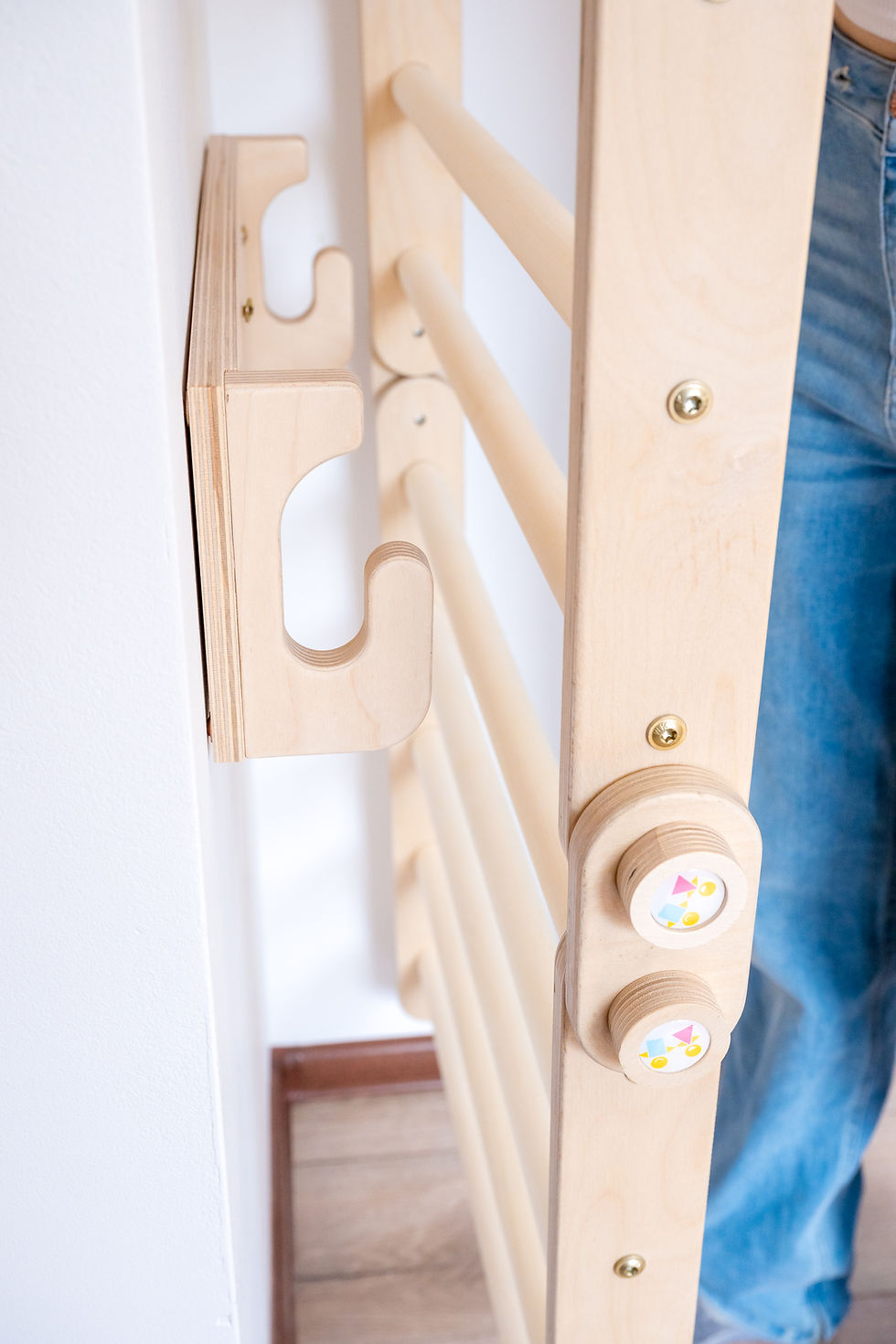
Must be securely mounted to a suitable wall
Play Options
Freestanding Climbing Frame
Depending on the model: climbing, traversing, sliding, swinging and additional accessories
Climbing Wall
Focuses primarily on climbing; available options depend on the wall configuration
Flexibility
Freestanding Climbing Frame
Can be moved, expanded or stored away, depending on the model
Climbing Wall
Remains in a fixed position
Living Space
Freestanding Climbing Frame
Requires floor space and room for active play
Climbing Wall
Uses wall space but still requires a safe active play area in front
-
You do not want to commit permanently to a wall-mounted setup.
-
You want to combine different types of active play in one solution.
-
You want the option to add accessories and new play ideas later.
-
You want to move the climbing frame when needed or, depending on the model, store it away to save space.

.jpg)
When Is a Climbing Wall the Better Choice?
A climbing wall can be a good option if you have a suitable wall and want to create a permanent, dedicated climbing area.
-
You want to make effective use of available wall space.
-
The climbing area can remain permanently in the same place.
-
You want the main focus to be on climbing.
-
Secure installation on a suitable wall is possible.
_edited.jpg)
Which Is Better for Small Spaces?
At first glance, a climbing wall may seem more space-saving because it does not require a freestanding structure.
However, sufficient clear and safe space must still be kept in front of the wall.
A freestanding model requires floor space but, depending on its design, may be compact, foldable or easy to reposition.
Tip: Do not compare product dimensions alone. Always allow enough space for active play and a safe area around the climbing setup.

Which Option Is Right for Your Family?

Choose a Freestanding Climbing Frame If…
Flexibility, versatile active play and expandability are more important to you.
_edited_edited.jpg)
Choose a Climbing Wall If…
Discover our best-selling products and customer favourites.
Frequently Asked Questions

CLIFF: Freestanding Active Play Solutions for Different Spaces
CLIFF offers freestanding indoor climbing frames to suit different spaces: CLIFF Flex is foldable and designed for smaller rooms, CLIFF Compact combines a space-saving design with accessories, and CLIFF Pro offers a larger premium active play setup with versatile expansion options.