
How to Set Up a Toddler’s Room from Age 1: Montessori-Inspired Ideas for Movement and Independence

Around your child’s first birthday, everyday life begins to change. Your little one pulls up on furniture, explores new routes around the home and wants to do more things independently. This is a good time to rethink their room: not as a place to store as many toys as possible, but as an environment where your child can play, move and make small choices safely.
A room for a one-year-old does not need a complete makeover. An open area for movement, accessible everyday items and a few carefully chosen pieces of furniture are often enough. This guide walks you through the essentials, with Montessori-inspired ideas, practical safety considerations and options for both small and spacious rooms.
What Does a One-Year-Old Need in Their Room?
Between their first and second birthdays, children develop movement skills at very different rates. Some still spend plenty of time crawling, while others are already walking and trying to climb onto low objects. Rather than following a rigid developmental timetable, focus on creating an environment that suits your child’s current abilities.
Three principles can guide your planning: child-height furniture encourages participation; open floor space makes room for movement; and a manageable selection of toys supports independent play. Montessori education offers a useful starting point: the environment should invite children to explore for themselves without overwhelming them. Explore more children’s room ideas.
Step 1: Divide the Room into Three Simple Areas
1. Movement Area
Keep an open area where you can easily see your child. Here, they can crawl, walk, turn around, carry objects and, when ready, enjoy age-appropriate climbing. Avoid trip hazards, loose rug edges and tightly packed furniture. The space required depends on the movement equipment and the safety clearances specified for it.
2. Play and Discovery Area
A low, stable shelf with a small selection of accessible toys is enough. Your child can choose an activity and, with your help, put it away afterwards. Rather than filling the room with flashing or noisy toys, try stacking cups, simple shape sorters, books and versatile wooden toys.
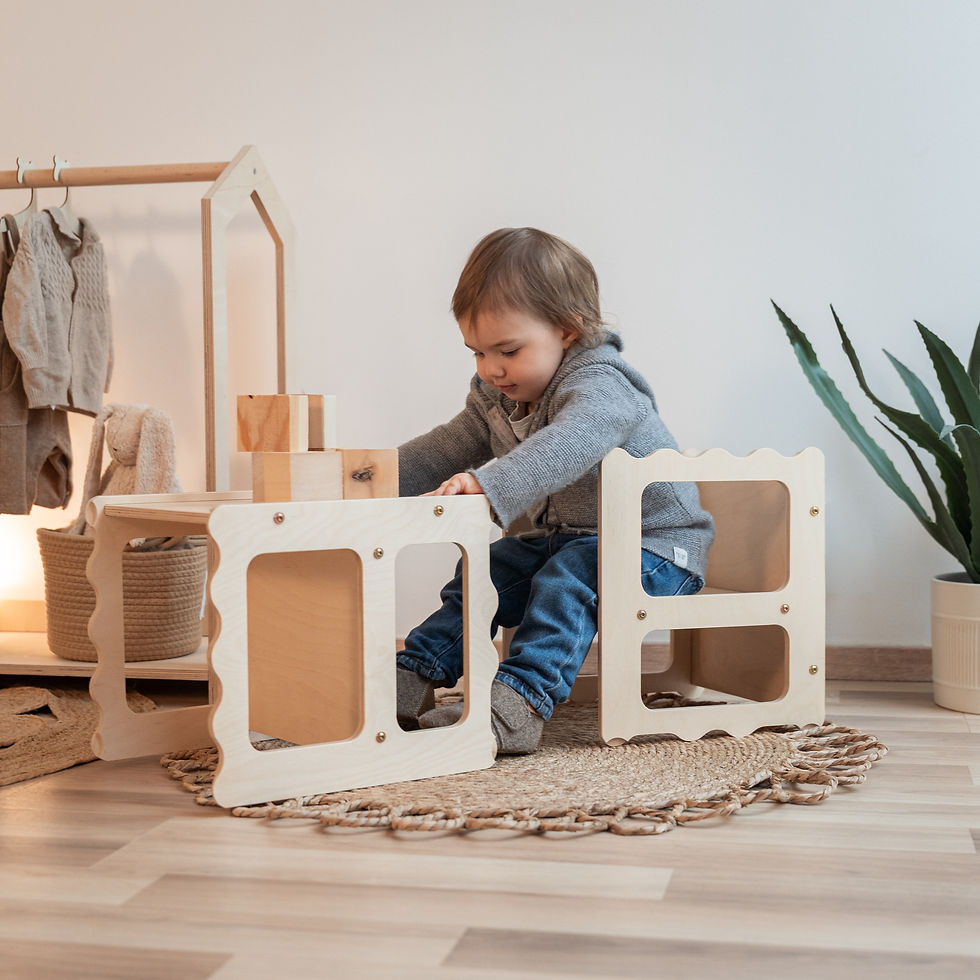
3. Everyday Routines Area
A designated place for shoes, a jacket or a small selection of clothes helps your child recognise daily routines. A Montessori wardrobe at child height makes clothing visible and accessible. Start by offering a choice between two suitable items. This lets your child participate without being distracted by too many options. Discover the Montessori wardrobe.
Step 2: Encourage Independence in Everyday Life
Independence does not begin with getting dressed alone. Choosing a book, putting a toy back or helping at mealtimes are all meaningful experiences. The goal is not for your child to master tasks as early as possible. They can watch, experiment and learn at their own pace.
The height-adjustable CLIFF Montessori High Chair supports family mealtimes with an adjustable seat and footrest. According to the product information, it is intended for use from around one year of age or once a child has started walking. A high chair belongs in the dining area, not the climbing or play area. Always use it as intended and never leave your child unattended in it. View the CLIFF Montessori High Chair.

For suitable activities at a worktop, the foldable CLIFF StepUp Learning Tower can be a useful addition. It folds away to save space after use and allows your child to observe and take part in simple routines at an appropriate height. Your child must have the necessary stability and movement skills, and you must follow the product instructions. A learning tower is not a climbing frame and does not replace adult supervision. Explore the foldable StepUp Learning Tower.
Step 3: Make Room for Movement
One-year-olds learn through repetition: pulling up, sitting down, standing again, stepping over a low obstacle and trying the same route once more. These movements offer opportunities to explore balance, coordination and body awareness. You do not need a constant stream of new activities; a thoughtfully arranged environment can be more valuable.
For Early Climbing Experiences: CLIFF Baby Climbing Set 4-in-1
The CLIFF Baby Climbing Set 4-in-1 offers compact, varied opportunities for movement, including crawling, pulling up and exploring low climbing and sliding surfaces. Whether and when it is suitable depends on your child’s abilities and the product’s stated age suitability. Use an appropriate surface, assemble it correctly and supervise your child closely.
For Smaller Spaces: CLIFF Compact
If you are planning your child’s room for the longer term, it may make sense to reserve a dedicated space for an indoor climbing frame. CLIFF Compact is an option for families looking for a more space-conscious climbing solution. Before buying, check not only the dimensions of the frame but also the movement area and safety clearances it requires. For a child around their first birthday, use must always match their developmental stage and the specific product’s age guidance.
When You Have More Space: CLIFF Pro
If you have more room available, CLIFF Pro offers a longer-term setup with different opportunities for movement and compatible accessories. Its uses can evolve as your child develops new skills. The included safety mat is part of the system, but assembly instructions, safety clearances and supervision remain essential. Not every play position or accessory is suitable for every age.
Remember: a larger climbing frame is not automatically a better choice. What matters is your child’s developmental stage, the space available and whether the movement area will be practical to use every day. For practical guidance, read about toys that encourage gross motor skills.
Step 4: Display Toys Clearly Instead of Filling the Room
A low shelf can be more useful than a large toy box. When your child can see what is available, choosing an activity becomes easier. Start with a few objects, notice which ones capture their interest and adjust the selection when needed.
· Place books and toys where your child can reach them independently.
· Swap individual items when interest fades, rather than following a fixed schedule.
· Keep familiar favourites available for longer. Repetition is an important part of learning.
· Store small parts that are unsuitable for your child’s age safely out of reach.
Step 5: Plan for Safety from the Start
A child-friendly room should allow movement while reducing avoidable hazards. Look at the space from your child’s perspective, including down at crawling height. Pay particular attention to:
· Tip-over prevention: secure shelves, chests of drawers and other furniture that could tip to the wall, following the manufacturer’s instructions.
· Clear pathways: avoid trip hazards, sharp corners and unstable furniture in the movement area.
· Windows and cords: secure windows and keep blind and curtain cords well out of reach.
· Sockets and small objects: use suitable safety covers and remove items that could be swallowed.
· Climbing equipment: follow age guidance, assembly instructions, safety clearances and requirements for flooring or impact protection.
· Supervision: even in a carefully arranged room, a one-year-old still needs age-appropriate adult supervision.
For wooden furniture, also look for careful workmanship, suitable finishes and transparent information about materials. CLIFF focuses on durable wooden products and EU production. You can find more about our materials, safety approach and care recommendations on our information pages. Read more about our materials, product safety and EU production.
Small Toddler Rooms: What Really Matters?

You can create a useful play area even when space is limited. Position larger furniture against the walls where practical, keep walking routes clear and choose products based on the space you actually have. A foldable learning tower saves storage space, while a compact climbing frame may be an alternative to several separate pieces of movement equipment. Measure the room before buying and include the clearances required by the manufacturer.
A useful test: can your child move around without constantly needing help to navigate the furniture? Can they reach a few chosen toys themselves? And is the room easy to tidy at the end of the day? If so, you may already have the most important foundations in place.
Frequently Asked Questions About Rooms for One-Year-Olds
Does a One-Year-Old Need a Dedicated Montessori Room?
No. Montessori-inspired principles also work in a corner of the living room: accessible materials, a manageable selection and enough space for independent play. The way you arrange the area matters more than the size of the room.
Which Climbing Frame Works in a Small Toddler Room?
If you want to plan ahead for a climbing frame, CLIFF Compact may be an option where space is limited. If you have more room, CLIFF Pro may be worth considering. Always compare the full dimensions, including required safety clearances, and check the age suitability of each model.
When Are Climbing Elements Suitable for One-Year-Olds?
This depends on your child’s abilities and the product’s age guidance. Low-level movement opportunities may encourage pulling up and exploration. Higher or more demanding climbing routes are suitable only once your child has developed the necessary skills. Always stay close and supervise attentively.
How Many Toys Should Be on the Shelf?
There is no fixed number that suits every child. Start with a small, manageable selection and observe how your child plays. You can rotate individual items without constantly buying new toys.
Is a Learning Tower the Same as a Climbing Frame?
No. A learning tower such as CLIFF StepUp helps a child participate in suitable everyday activities from a raised standing platform. A climbing frame is designed for movement and climbing play. Both products must only be used for their intended purposes.
Conclusion: A Good Toddler Room Grows with Your Child
The best room for a one-year-old is not the one with the most furniture. It offers room to move, opportunities to take part in everyday life and a manageable selection of things your child can discover independently. Begin with clear floor space and accessible toys. Then add furniture and movement equipment that suit your family’s routines, available space and your child’s current abilities.
Explore our Montessori-inspired children’s furniture. For age-specific recommendations, see toys for one-year-olds.

$50
Product Title
Product Details goes here with the simple product description and more information can be seen by clicking the see more button. Product Details goes here with the simple product description and more information can be seen by clicking the see more button

$50
Product Title
Product Details goes here with the simple product description and more information can be seen by clicking the see more button. Product Details goes here with the simple product description and more information can be seen by clicking the see more button.
$50
Product Title
Product Details goes here with the simple product description and more information can be seen by clicking the see more button. Product Details goes here with the simple product description and more information can be seen by clicking the see more button.


Comments